
 @samuelhumeImagesMedicine · Cardiology1 question
Blood pressure swings
Reading blood pressure and getting the diagnosis
What you get

Results so far

Questions 1
- Q1Short answerCardiologyAdvanced
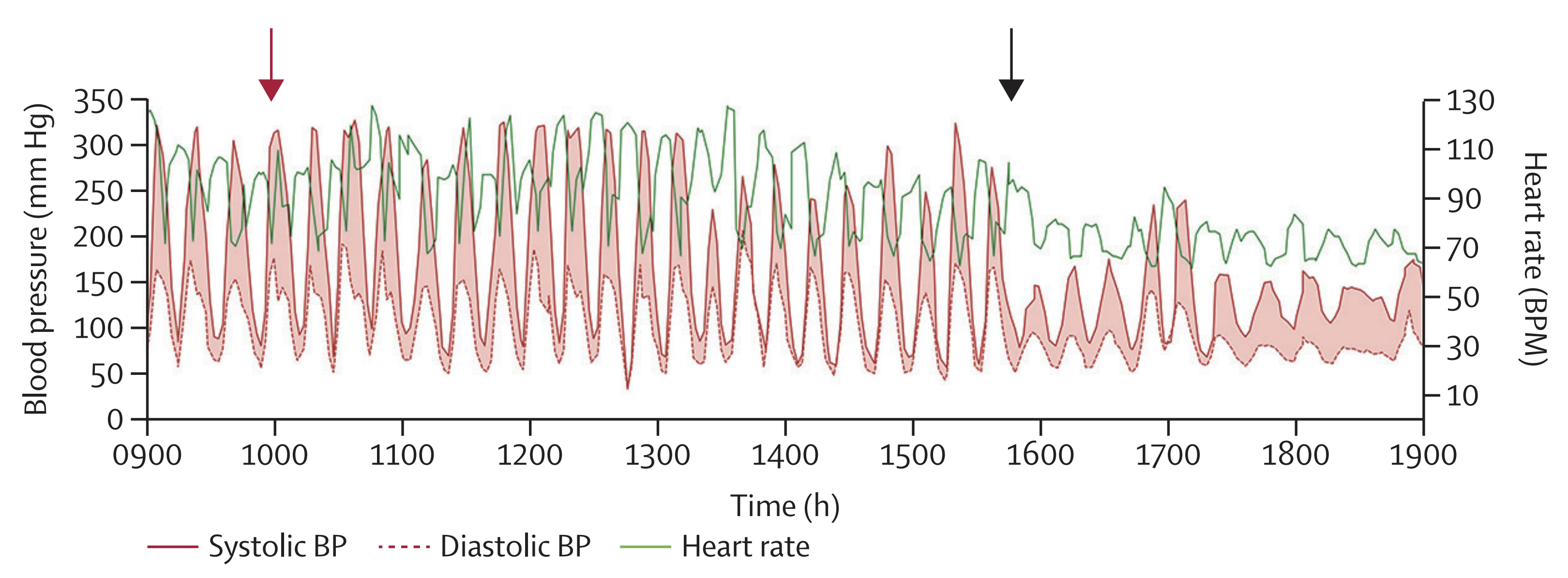
A 55-year-old man presents to the emergency department with recurrent episodes of chest pain, dyspnoea, headache and pallor over the preceding 24 hours. He is distressed, with cold, clammy skin. His initial blood pressure is 250/140 mmHg. Continuous invasive haemodynamic monitoring is shown in the attached figure. What is the most likely diagnosis? Describe the characteristic haemodynamic findings and explain what the red and black arrows most likely represent.
The Lancet Rubric
- +3Identifies phaeochromocytoma crisis
- +2Recognises cyclical hypertension and hypotension
- +2Recognises reciprocal changes in heart rate
- +2Identifies administration of alpha-blockade at the red arrow
- +1Specifically identifies phenoxybenzamine
- +2Identifies the black arrow as the onset of therapeutic effect and haemodynamic stabilisation
- -2Suggests beta-blockade before alpha-blockade
Show answer
Reference answer Phaeochromocytoma crisis, characterised by extreme cyclical fluctuations in blood pressure with reciprocal changes in heart rate. The red arrow indicates administration of phenoxybenzamine, a non-selective alpha-adrenergic antagonist. The black arrow indicates the onset of its clinically observable effect, with subsequent haemodynamic stabilisation.
Source My own question
See how your model does.
RunHands-on records 0
No hands-on records yet.
Log a hands-on recordAbout
- License
- CC BY 4.0
Versions
- v1First version, 1 questions1 question · Nov 26, 2026